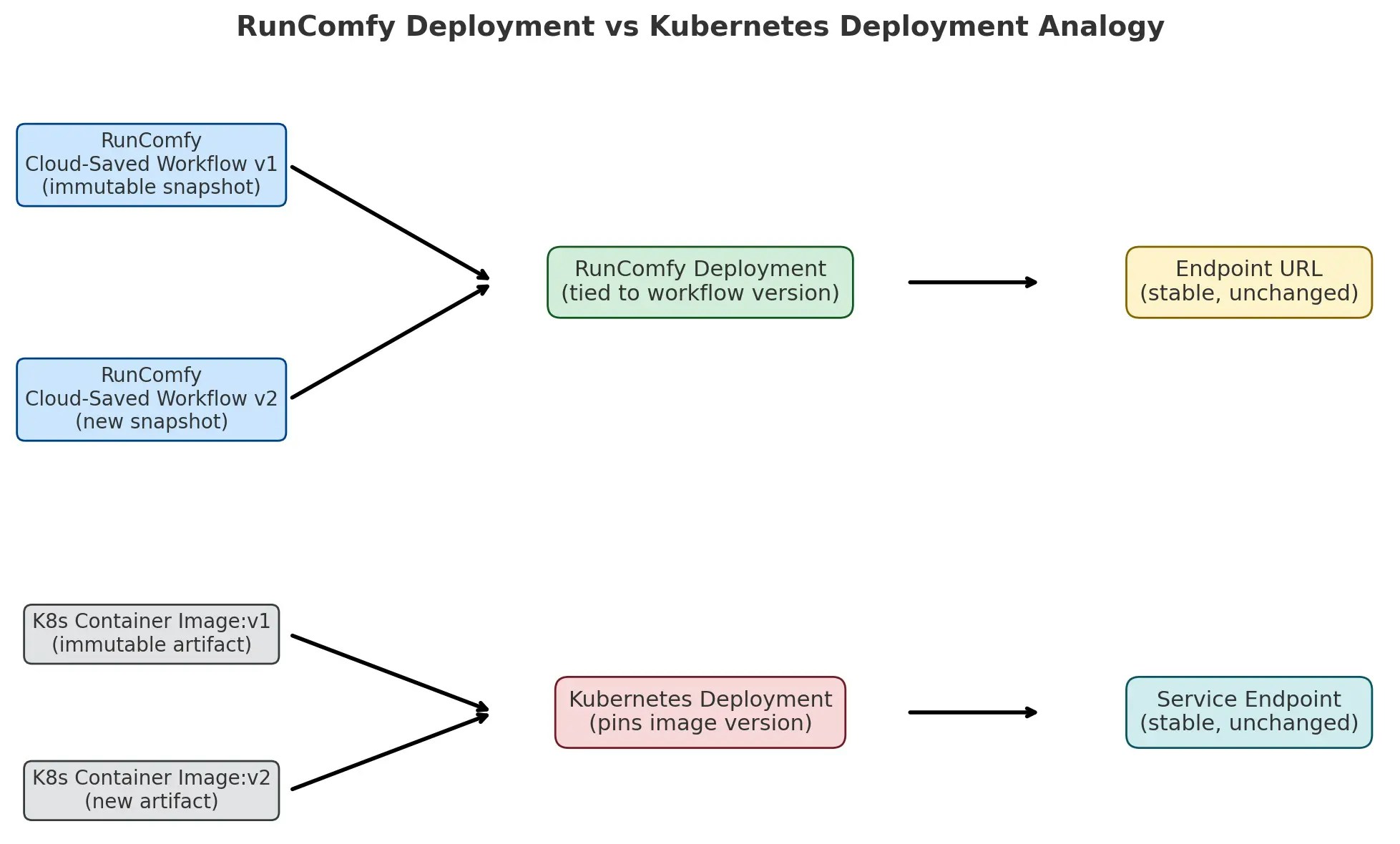
| Cloud-saved workflow version | Container image (with tag) | Each workflow version is like a built image. It’s immutable and versioned. |
| Deployment | Kubernetes Deployment | A deployment references a specific version/image to run, ensuring consistency. |
| Deployment ID / Endpoint URL | Deployment UID / Service endpoint | These remain stable, even if the version/image inside is updated. |
| Updating workflow version in a deployment | kubectl set image / updating deployment spec | You update the reference to a new version without changing the deployment itself. |
| Saving a new workflow version | Building & pushing a new container image | Creates a new artifact, but doesn’t affect running deployments until updated. |